How a digital classroom and technology make teachers' lives easier
It is six in the evening and Camila, a teacher, closes her computer with a different feeling from a year ago. Back then, at this hour she was only just starting to grade, prepare the next day's lesson and answer messages from families. Today, much of that is already done. It is not that she works fewer hours by neglecting her job; she works better because the digital classroom's technology takes care of the repetitive and leaves the essentials to her. This is the story of how a digital classroom helps teachers exactly where it is hardest.
In brief
- Technology reduces the operational load: grading, organising, communicating and preparing.
- It makes it easier to cater for the diversity of the group, with several routes to the same objective.
- It lets teachers follow many students at once, with progress in plain sight.
- With an offline-first approach, the lesson continues even if the connection fails.
Less time on the repetitive, more time to teach
Teaching well takes energy, and much of that energy is used up on tasks that repeat every week. The eClass Digital platform, AVACOM's own LMS, takes on part of that work: it applies automatic grading to objective questions, consolidates the mark in the gradebook by activity and term, organises materials by unit and grade, takes attendance with a visual register and sends reminders of assignments and dates. Camila thus recovers the hours that used to go on administration, and devotes them to what really makes a difference, accompanying each student.
Support for reaching the whole group
One of the biggest challenges for teachers is that very different paces coexist in the same classroom. The AVACOM ecosystem helps to offer several routes towards the same objective: a reinforcement activity for those who need to consolidate, a standard activity and a challenge for those who move faster, with study mode letting each student practise and pick up where they left off. The teacher does not prepare thirty different lessons; they prepare one experience with different levels, and the platform makes it easier for each student to work at theirs.
The best technology for teachers is the one that takes care of the repetitive and helps them reach every student.
Following many students, with progress in plain sight
Keeping track of a whole group from memory is almost impossible. The eClass Digital learning engine calculates each student's mastery by curriculum objective and alerts the teacher when someone needs reinforcement, and the reports show progress by student, group or course. Camila sees at a glance who is doing well and who needs support, and that information arrives in time to guide the next lesson: what to reinforce, whom to accompany closely and which activity to adjust. The teacher decides, and the platform provides the evidence to decide better.
Preparing lessons without starting from scratch
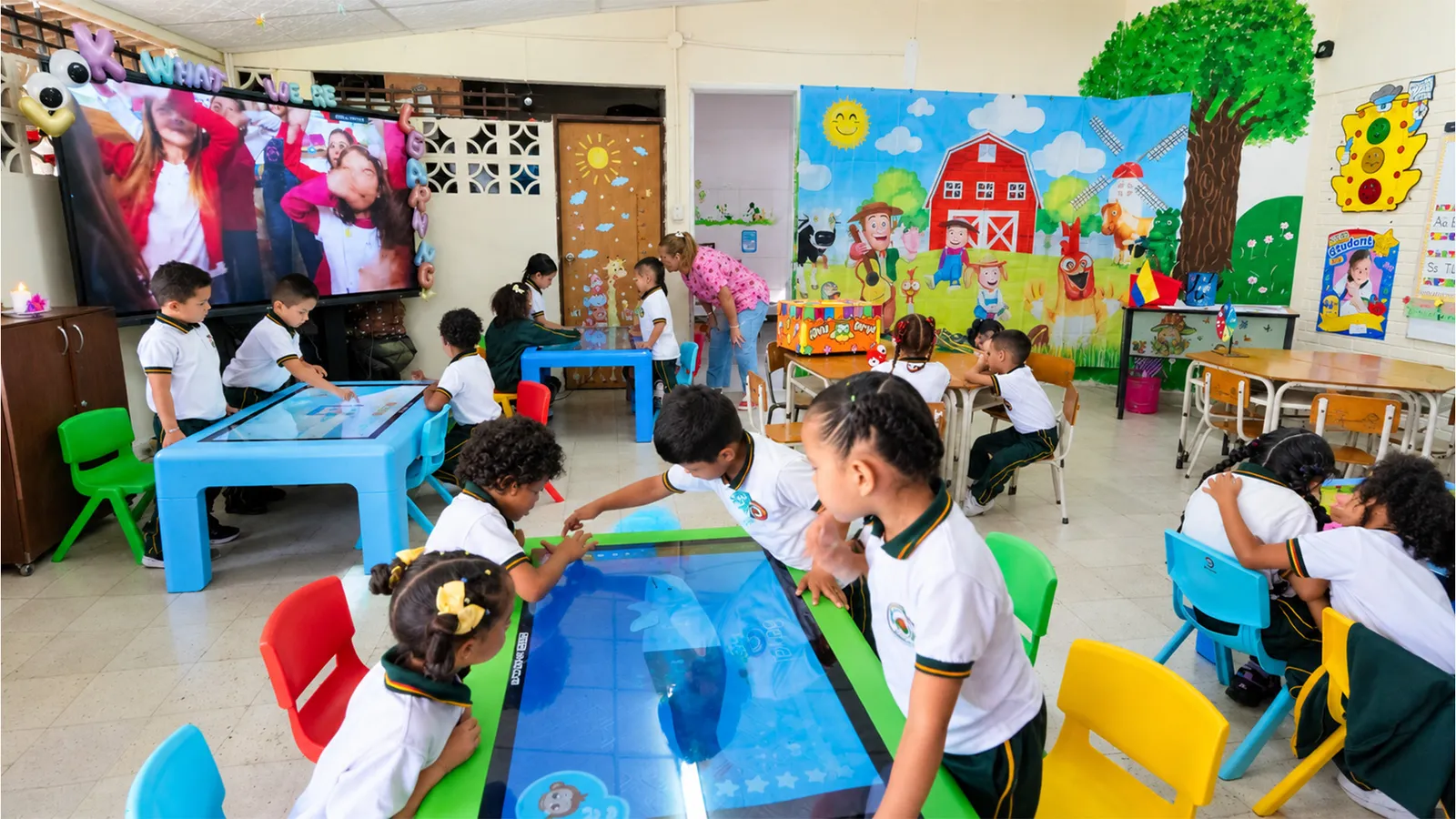
Remaking materials every week is exhausting. At AVACOM, content comes preinstalled and anchored to the curriculum, and with the course builder and the lesson plan, teachers put together and reuse their own sessions from that catalogue, with digital rubrics that standardise grading. A piece of content is projected on the interactive eScreen, adjusted for another group and saved for next time. Preparation becomes a process that adds up over time, not a race that starts again every Monday.
Communication with families in one place
Keeping families informed used to mean several scattered channels. The AVACOM ecosystem brings communication together in one place: notifications about assignments and grades, messaging with a history and clear progress reports. Teachers spend less time coordinating messages and more time building trust with each family, with information that speaks for itself.
Help that doesn't stop when the internet does
A tool that switches off when the connection fails is of little use. eClass Digital is built offline-first by architecture: the lesson, grading and content keep working without internet, and everything syncs when the network returns. Camila keeps working even if the connection drops, with the peace of mind that her day does not depend on everything working perfectly. This is one of AVACOM's greatest strengths compared with platforms that stop when the network goes down.
Technology in the service of vocation
The aim of all this is not to add screens, but to give teachers back the most valuable thing they have: time and clarity to teach. AVACOM supports that journey with teacher training organised in tracks, certifications and three levels of support, so that adoption is natural and sustained. When technology takes care of the repetitive, makes learning visible and sustains continuity, teachers regain energy to inspire, accompany and believe in every student. The tool helps; vocation remains the heart of the lesson.
At AVACOM we design a digital education ecosystem with an LMS platform, content, training and support, built offline-first, to make teachers' lives easier and give them back time for what matters most.
Frequently asked questions
Which specific tasks does a digital classroom help teachers with?
Grading objective questions, organising materials, taking attendance, sending reminders, communicating with families and following each student's progress, which reduces the day-to-day operational load.
Does technology help cater for the diversity of the group?
Yes. It makes it easier to offer several routes towards the same objective, with reinforcement, standard and challenge activities, so that each student works at their own pace within the same lesson.
What happens if the internet fails during the lesson?
With an offline-first approach, the lesson continues, activities are saved and the information syncs when the connection returns, so the teacher's work does not stop.