Computational thinking: the foundation of logical reasoning in the digital age
Breaking a problem down, spotting patterns and designing a step-by-step solution: a way of thinking that schools can teach from an early age, with and without devices.
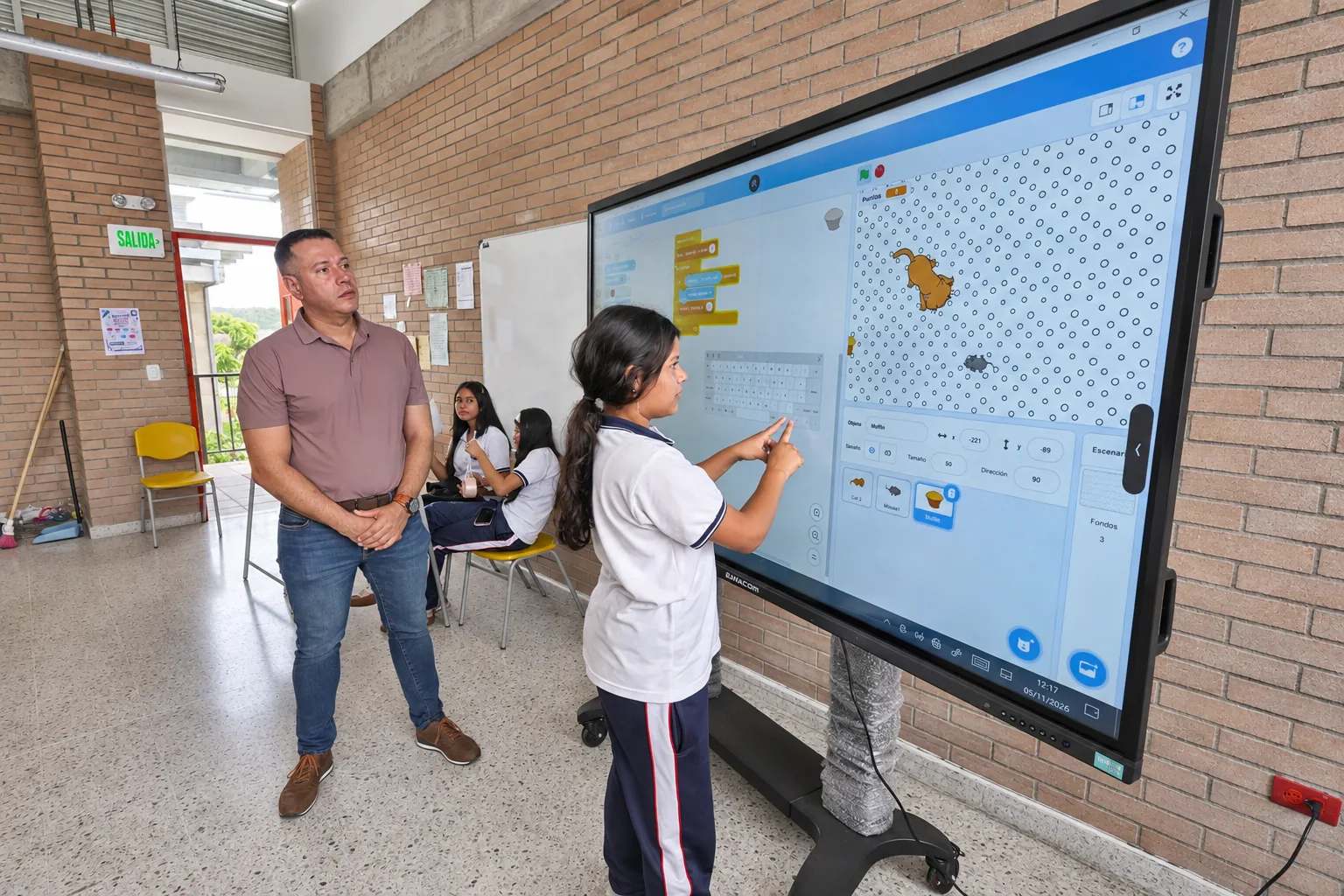
Computational thinking is a way of solving problems step by step.
It brings together four skills: decomposition, pattern recognition, abstraction and algorithm design.
It can be practiced with and without devices, starting in preschool.
The Digital Education Law promotes it in basic and upper-secondary education.
When people hear the phrase computational thinking, many picture a child in front of a screen writing code. The reality is broader and more interesting: it is a way of thinking that helps solve almost any problem, from packing a backpack to designing an experiment. Programming is one of its applications, and the underlying competency goes much further.
What computational thinking is
Computational thinking brings together four skills that work hand in hand. Decomposition breaks a large problem into manageable pieces. Pattern recognition finds what repeats and makes it possible to reuse solutions. Abstraction keeps what is essential and sets aside details that add nothing. And algorithm design puts the steps in order to reach a solution that another person, or a machine, can follow. These are mental tools a student uses for life.
Beyond coding
One idea frees many teachers: computational thinking can be taught without a single device. Putting a recipe into clear steps, sorting leaves by their patterns, giving precise instructions to draw a shape without seeing it. These are screen-free activities that train the same way of reasoning. When technology arrives, first with visual blocks and later with languages such as Python, students already bring the logic with them, and programming becomes the place where that logic comes to life.
Why it matters now
The timing is right in Colombia. Law 2626 of 2026, known as the Digital Education Law, expressly incorporates programming, artificial intelligence and data science into basic and upper-secondary education. Computational thinking is the foundation those subjects rest on. A school that cultivates it from preschool lays the groundwork so that, later on, coding and creating with technology become a natural next step.
How to bring it into the classroom
A good path moves forward in stages. In the early years, screen-free games and challenges that train logic. In primary school, visual blocks and simple projects that students build and test. In secondary school, programming, robotics and STEAM projects where computational thinking is applied to real problems. Each stage builds on the one before, and technology supports that climb with tools suited to every age.
Coding is the application. Thinking clearly to solve problems is the competency that lasts forever.
AVACOM's STEAM classrooms and its offline-first ecosystem support computational thinking at every stage, from the first logic challenges to robotics and programming, with curriculum-aligned content and ongoing teacher training.
Frequently asked questions
What is computational thinking?
It is a way of solving problems step by step that brings together four skills: breaking a problem into parts, recognizing patterns, abstracting what is essential and designing algorithms, that is, sequences of clear steps.
Can computational thinking be taught without a computer?
Yes. Many activities can be practiced without a screen from preschool on, with logic games, sorting objects by patterns and exercises in giving precise instructions.
Why does computational thinking matter in Colombia right now?
Because Law 2626 of 2026, the Digital Education Law, incorporates programming, artificial intelligence and data science into basic and upper-secondary education, and computational thinking is their foundation.