What are the phases of STEAM education? A complete guide
STEAM education is organised into five phases: inquiry, research, design and prototyping, experimentation and communicating results. Each phase serves a purpose of its own and prepares the ground for the next, so the student moves from initial curiosity to a finished, well-argued project. Knowing these phases helps institutions plan STEAM projects with structure and with educational technology that supports every stage.
In brief
- The five phases: inquiry, research, design and prototyping, experimentation and communication.
- Each phase leans on a different tool from the educational technology ecosystem.
- The experimentation phase teaches that every adjustment brings you closer to a better solution.
What is STEAM education and why is it organised into phases?
STEAM education brings together science, technology, engineering, art and mathematics in projects that solve a real problem. It is organised into phases because that is how the people who create, research and design outside the classroom work: first they explore a question, then they research, then they build a solution and finally they communicate it. Following this sequence gives teachers a clear guide for planning their lessons, and students a method they can repeat in any project.
The five phases at a glance
| Phase | What happens | Educational technology support |
|---|---|---|
| 1. Inquiry | A question or challenge is born that sparks genuine curiosity. | The interactive screen helps build the question as a group and keep a record of it. |
| 2. Research | Students gather what is already known and what they need to learn. | Educational software and platforms that organise sources and content by level. |
| 3. Design and prototyping | A first version of the solution is sketched and built. | Modelling software and making materials inside the digital classroom. |
| 4. Experimentation | The prototype is tested, adjusted and tested again. | An LMS platform where versions and results are recorded. |
| 5. Communication | The project is presented and feedback is received. | The interactive screen gives structure to the final presentation. |
Phase 1 · Inquiry and framing the question
Every STEAM education project starts with a question or a challenge that sparks genuine curiosity. Here the teacher's role is to guide observation of the surroundings and help frame concrete questions, with listening first. An interactive screen makes it easier for the group to build the question collectively, visualise ideas in real time and keep a record of the starting point.
Phase 2 · Research and gathering information
With the question defined, students research what is known about the topic and what knowledge of science, mathematics or technology they need in order to move forward. This phase leans on educational software and educational platforms that organise sources, simulations and content by level, so that each student researches at their own pace inside a shared digital classroom.
Phase 3 · Design and prototyping of the solution
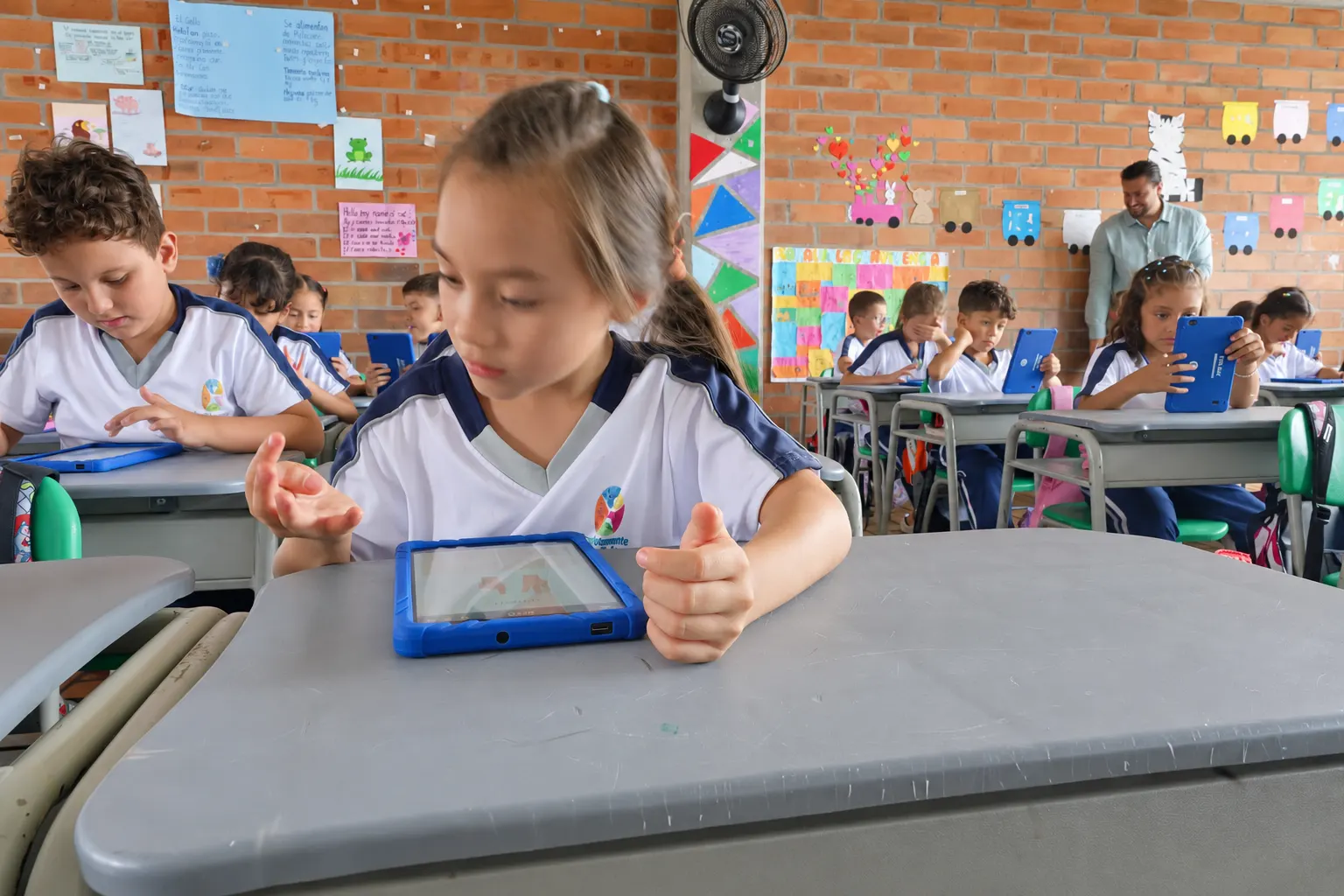
Students sketch, model or build a first version of their solution. The design takes physical, digital or mixed form, and this is where art and engineering meet most strongly. A digital classroom equipped with the right educational technology, from modelling software to making materials, lets the prototype go from idea to tangible object in the same workspace.
Phase 4 · Experimentation and iteration
The prototype is put to the test, adjusted and tested again. This phase is the heart of scientific and engineering thinking within STEAM education, because it teaches that error is part of the process and that every adjustment brings you closer to a sounder solution. When teachers document the iteration in an LMS platform, learning about the process becomes as visible as the final result.
Phase 5 · Communication and assessment of results
The last phase consists of presenting the project, explaining the process followed and receiving feedback. Communicating clearly is a core competence of STEAM education, as valuable as technical knowledge. Leaning on an interactive screen or a digital whiteboard for the final presentation helps students structure what they say, show data and answer questions in a format close to a professional setting.
Educational technology that supports the five phases
A well-designed educational technology ecosystem strengthens every phase of STEAM education while respecting its essence. Connected digital classrooms, specialised educational software and tracking platforms give each stage the support it needs, from recording the initial question to the final presentation. Institutions that integrate this technology as part of the methodology end up with more complete STEAM projects and more independent students.
At AVACOM we design educational technology ecosystems that support every phase of STEAM education, from the classroom to the final presentation of the project. Get to know the ecosystem at avacomworld.com.
Frequently asked questions
What are the phases of STEAM education?
The five phases are inquiry, research, design and prototyping, experimentation and iteration, and communicating results. Each one builds on the previous one until it reaches a finished, well-argued project.
What is the difference between STEAM education and STEM education?
STEAM education adds art as a formal component alongside science, technology, engineering and mathematics, which strengthens creative thinking and visual communication within every project.
What role does educational technology play in a STEAM project?
It supports every phase: it eases research with specialised software, design with digital tools, iteration with tracking platforms and the final communication with interactive visual resources.
Which phase involves the most adjustments and why is that a good thing?
The experimentation and iteration phase concentrates most of the adjustments. It is a good thing because it teaches that every adjustment is valuable information that improves the final solution.