Gamification in the classroom: how play drives learning
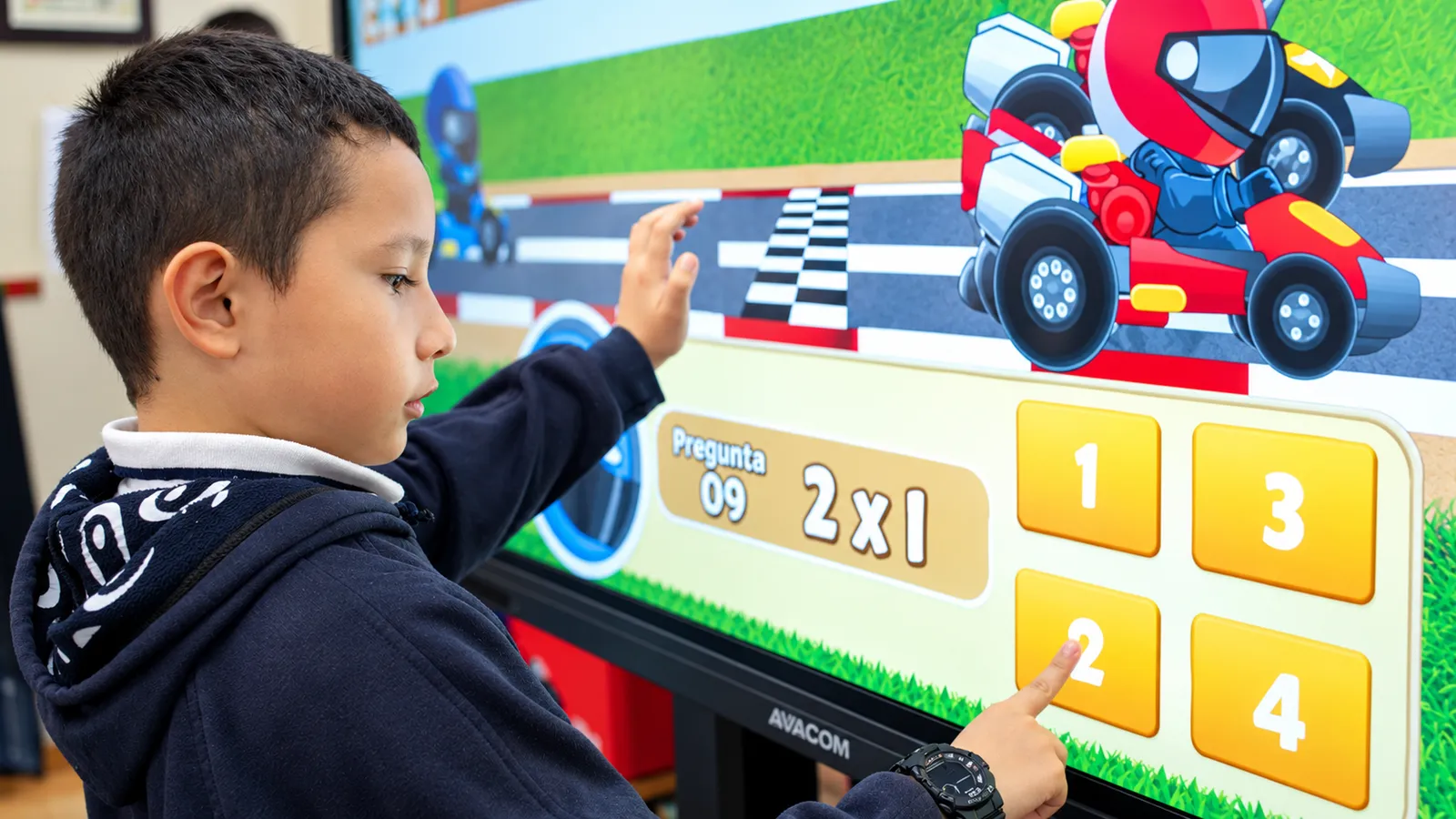
Daniel found it hard to concentrate in maths, until the morning the lesson became a mission: in teams, they had to solve challenges to level up on the interactive screen, earn badges and unlock the next challenge. That hour flew by, and Daniel, for the first time, asked to stay and finish. The content had not changed; the experience had. That is gamification in the classroom: using the logic of games so that learning feels like a challenge worth taking on.
In brief
- Gamification applies game elements, such as challenges, levels and rewards, to learning.
- It increases students' motivation, participation and sense of achievement.
- It works best when points serve a clear pedagogical objective.
- An LMS platform and an interactive screen make it easier to bring it into the classroom.
What is educational gamification?
Educational gamification means applying elements typical of games, such as clear goals, progressive challenges, points, badges and immediate feedback, to a learning experience. It is not about turning the lesson into a video game, but about taking what hooks us in games, visible progress and an achievable challenge, and putting it at the service of a pedagogical objective. When it is designed with intent, game-based learning sparks motivation and sustains the group's attention.
Why play drives learning
Play activates something deep: curiosity, the desire to overcome a challenge and the satisfaction of achieving it. In the classroom, that energy translates into participation. Students get more involved when they see their progress, when each attempt brings them closer to a goal and when mistakes become part of the game instead of a punishment. Immediate feedback shows them what to improve on the spot, and moving up through levels feeds the confidence to keep going.
Gamification does not change what is learned; it changes how eager students are to learn it.
Elements that work in class
A few ingredients make gamification genuinely worthwhile:
- Challenges with a purpose: each challenge connects with a specific learning objective.
- Visible progress: levels, progress bars or badges that show how much has been achieved.
- Immediate feedback: students know instantly what they got right and what to adjust.
- Collaboration: team challenges where every member contributes to moving forward.
- Narrative: a story or mission that gives the activity meaning.
How to bring gamification into the classroom with AVACOM
A digital education ecosystem makes gamification simple and sustainable. With AVACOM's eClass Digital platform, the teacher launches challenges and live quizzes, automatic grading gives immediate feedback, and the gradebook and the learning engine make each student's progress visible by objective. The interactive eScreen turns the challenge into an experience shared by the whole group, and content anchored to the curriculum ensures that each game teaches what it should. With the offline-first approach, the activity continues even if the connection fails.
Keeping the balance
Gamification bears its best fruit when play accompanies learning rather than replacing it. Points should reward effort and improvement, competition should coexist with collaboration and the focus should stay on what students understand and achieve. Used with judgement, it becomes a powerful ally of motivation.
At AVACOM we design a digital education ecosystem, with the eClass Digital platform and the interactive eScreen, built offline-first, so that gamification sparks students' motivation in every community.
Frequently asked questions
What is gamification in the classroom?
It means applying game elements, such as challenges, levels, points and badges, to a learning experience to increase students' motivation and participation in the service of a pedagogical objective.
Does gamification improve learning?
When it is designed with a clear objective, it supports motivation, attention and a sense of achievement, and it makes feedback and mistakes a natural part of the learning process.
Which tools make educational gamification easier?
An LMS platform with live quizzes, automatic grading and progress by objective, together with an interactive screen that turns the challenge into an experience shared by the group.