Literacy in Colombia: the number that calls us to act early
In Colombia, only 45% of third-grade children read and write adequately, according to the 2023 Saber tests, the most recent ones applied. The figure, released in September 2026, sparked a necessary conversation about early literacy and its role throughout school life. At AVACOM we read this data as a call to act early, with education at the centre and technology as an ally to teachers.
In brief
- 45% of third-grade children in Colombia read and write adequately; 55% still face difficulties.
- In the region, Argentina reaches 57.3%, Chile 60.9% and Brazil 66%.
- The early years set off a domino effect: first children learn to read, then they read to learn everything else.
- The answer lies in early, focused and sustained interventions, with teacher support.
- Educational technology contributes as a facilitator, and it lands with more strength when it reaches every community.
What the number tells us
The data is clear and deserves calm attention. Fewer than half of third-grade students reach the expected level of reading and writing, and the rest progress with difficulties worth addressing in time. The regional comparison helps put the challenge in perspective: Argentina records 57.3%, Chile 60.9% and Brazil 66% of children reaching these levels. Colombia therefore has a concrete opportunity to close that gap with pedagogical work focused on the early years.
The domino effect of the early years
Early reading has an effect that extends across the whole school journey. In the early grades, the student learns to read; from there, they read to learn science, mathematics and every new subject. When reading arrives solidly, it opens doors in every subject. When it arrives with difficulty, the effort builds up year after year. That is why early literacy is one of the highest-impact educational investments.
The scale of the challenge also shows up in other recent studies. Around 51% of children aged 6 to 8 in Colombia are at risk of not becoming literate on time, which amounts to close to 1.3 million girls and boys. A 2024 World Bank analysis documented learning poverty in reading in the early grades, with cases such as Cali, where a share of students struggled to recognise words while reading for one minute. These are signals that call for acting with resolve and with hope.
Why the early years are decisive
Learning to read on time is much more than mastering a technique. It is the key that allows a child to understand, imagine, ask and take part. Specialists agree that early, focused and sustained interventions are what generate real change, and that the teacher's work remains at the heart of that process. Technology plays its best role when it strengthens that human work and brings it closer to each student, respecting the pace at which each one learns.
How educational technology supports early literacy
Well-integrated educational technology brings concrete tools for the early grades, always in service of the teacher and of the reading method the institution chooses. These are some of the ways it adds value:
Multisensory experiences
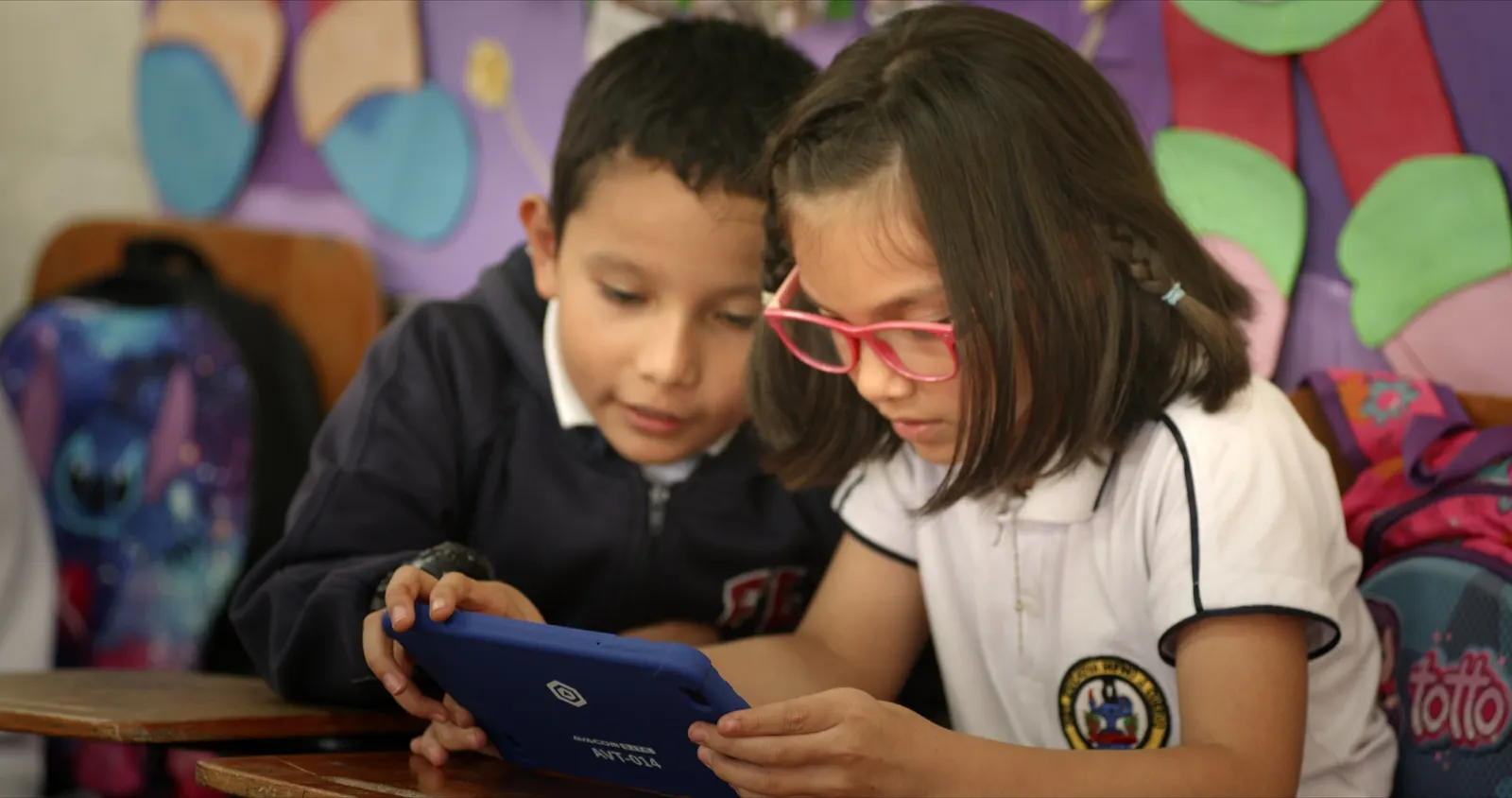
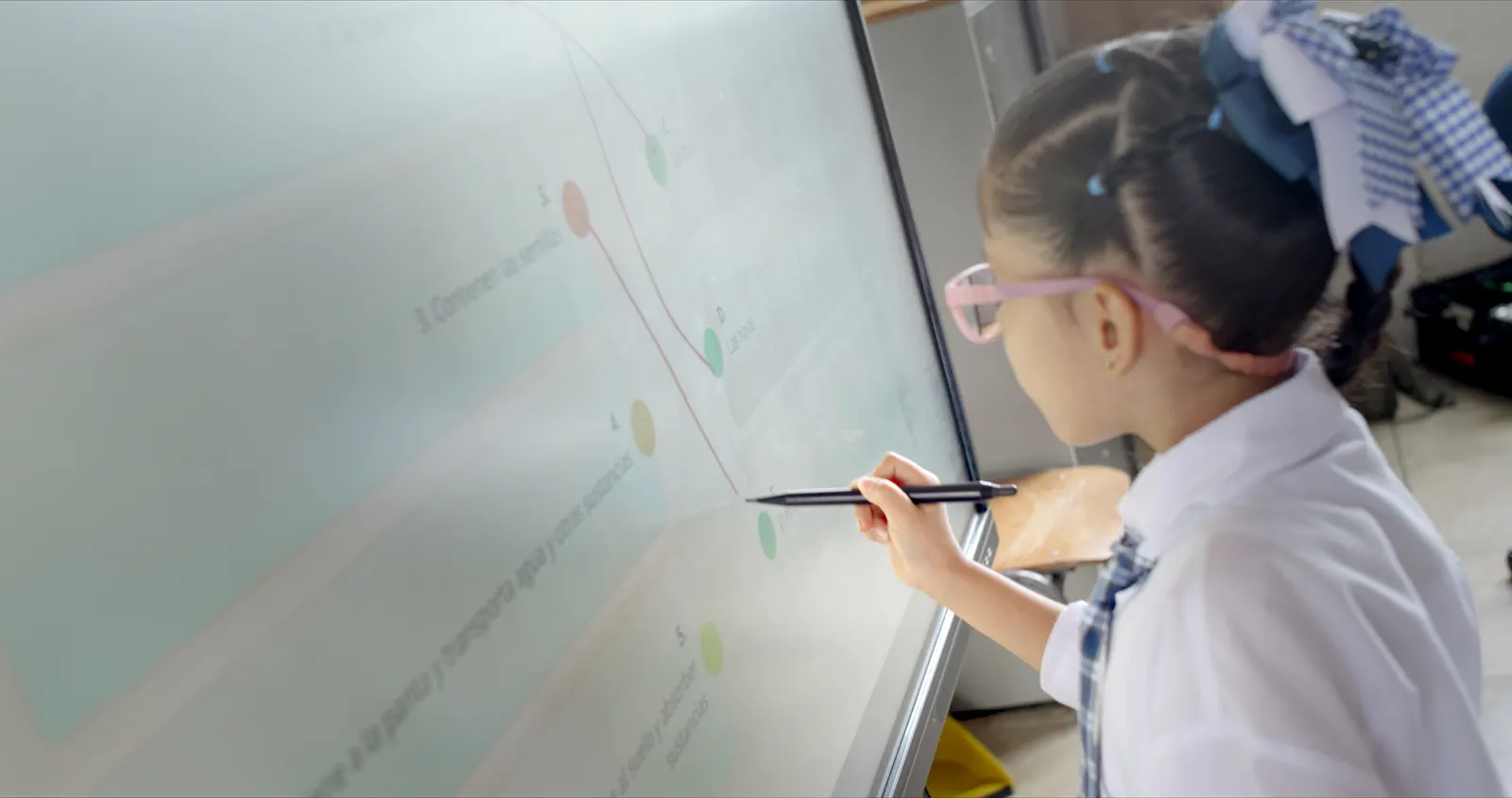
Content that combines image, sound and movement on an interactive screen helps the youngest children associate letters, sounds and meanings through active participation. Reading becomes a close, motivating experience from preschool onward.
Personalised pace
Every child learns to read at their own pace. Activities that adjust to that progress let those who need more practice get it, and let those who move quickly find new challenges, all within the same class.
Progress made visible for the teacher
An LMS platform makes each student's progress visible by learning objective, and lets the teacher identify in time who needs closer support. Early intervention becomes possible because the information arrives early.
Content anchored to the curriculum
Material aligned with the curriculum and official standards gives teachers classroom-ready resources, with sequences that respect what is taught before and what comes next in the reading and writing process.
AVACOM's view: reaching every community
At AVACOM we believe education transforms people and that the digital ecosystem drives their progress. Our proposal is an educational ecosystem that brings together classrooms configured by stage, an LMS platform, curriculum-aligned content and teacher support, with one feature that is key in the face of this challenge: it works with a connection and also without one. Thanks to its offline technology, the learning experience reaches every community, in the city and in the countryside, with the same quality.
That capability matters especially in early literacy, because reading gaps tend to be widest exactly where connectivity is weakest. A classroom that keeps the lesson going without depending on the internet helps ensure no child is left behind because of where they were born. AVACOM supports institutions with teacher training, continuous reinforcement and support, so that technology translates into real learning.
An opportunity to act together
The 45% figure describes a major challenge and, at the same time, a clear opportunity. Colombia has committed teachers, evidence about what works, and tools capable of reaching every classroom. When quality teaching, early intervention and the right technology work together, the gap narrows and every child gains the chance to read in order to learn for life.
AVACOM supports institutions across Latin America, Europe and North America with an educational technology ecosystem that reaches every community, with a connection and also without one, so that education can keep its promise from the earliest years.
Sources
Infobae (6 September 2026): Colombia faces a literacy crisis
El Tiempo: Alert over literacy in Colombia (the domino effect)
World Bank: Learning to read on time matters
Frequently asked questions
What does the number tell us about literacy in Colombia?
According to the 2023 Saber tests, 45% of third-grade children in Colombia read and write adequately, while the remaining 55% face difficulties in these skills.
Why is literacy in the early years so important?
Because in the early grades the student learns to read and, from there, reads to learn every other subject. Solid early reading benefits the whole school journey.
How can educational technology help improve reading?
It contributes multisensory experiences, activities that respect each child's pace, progress made visible for the teacher, and content aligned with the curriculum, always in support of the teacher's pedagogical work.