The digital classroom and the teacher: the positive effect on the way we teach
Andrés had been teaching science for twenty years when his school brought in a digital classroom. At first he viewed it with caution. A few weeks later, he discovered something unexpected: he had more time for what he had always wanted to do, look each student in the eye and accompany their progress. Technology did not change his vocation; it changed the day-to-day routine around it. This is the story of the positive effect a digital classroom has on the way teachers teach and on their lives.
In brief
- A digital classroom gives teachers back time by simplifying repetitive tasks.
- It makes each student's progress visible and makes early intervention easier.
- It widens the ways of teaching: experimenting, personalising, creating and collaborating.
- It strengthens the teaching community, which learns and shares among peers.
More time for what really matters
A good part of the teaching day goes on tasks that repeat themselves: taking attendance, grading, organising materials, preparing the same lesson again and again. A digital classroom, with its LMS platform, automates part of that work and gives back valuable hours. That time returns to where it creates the most value: accompanying students, answering their questions and caring for the human bond that no tool replaces.
Teaching with progress in plain sight
In a large class it is hard to know, in the moment, who has understood and who needs support. A digital classroom makes each student's progress visible by learning objective, and allows the teacher to step in on time. Teaching becomes more precise, because the information arrives early and guides every pedagogical decision.
The best technology for a teacher is the one that gives back time and shows whom to accompany.
New ways of teaching
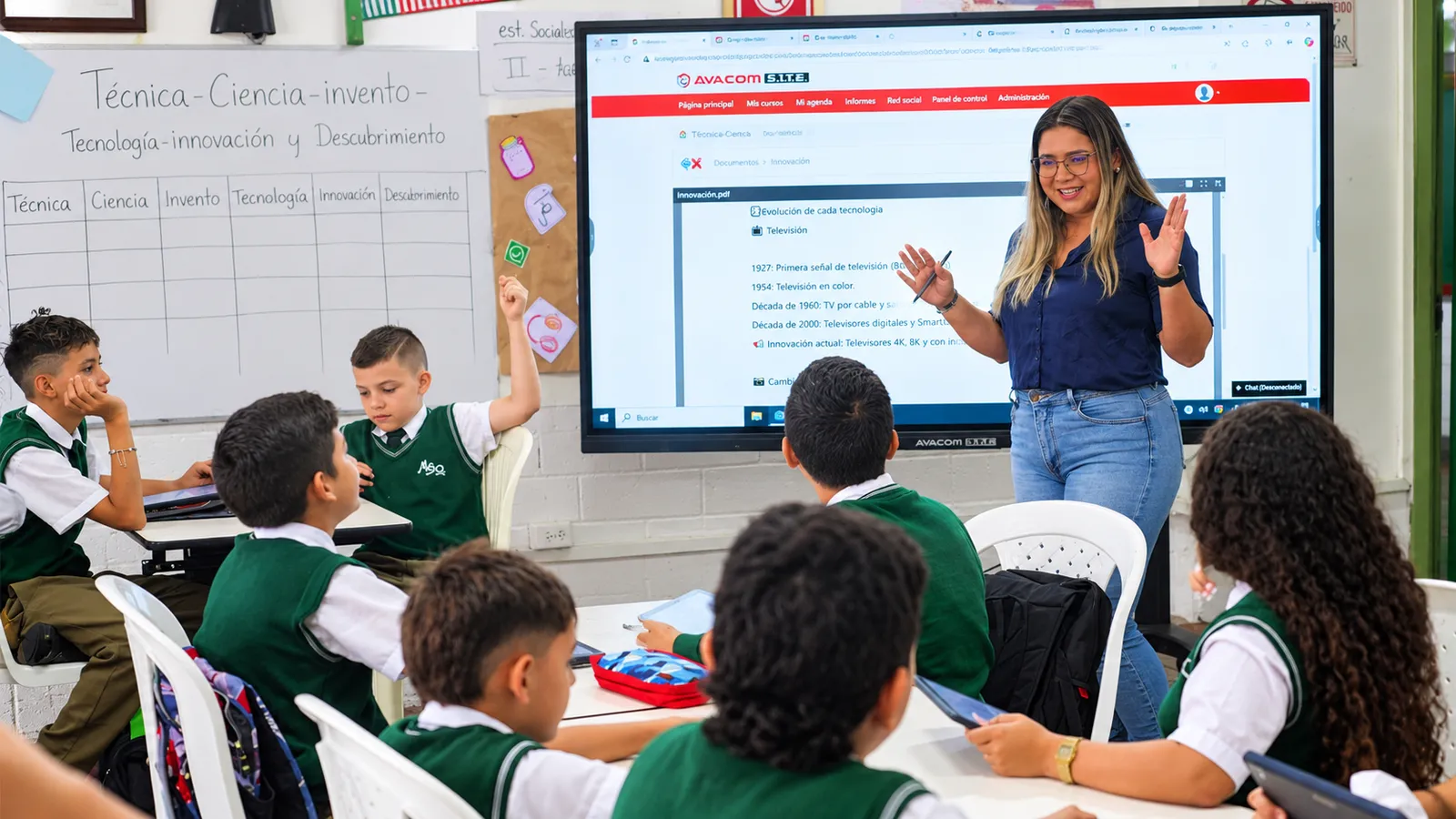
A digital classroom widens the teacher's repertoire. The interactive screen turns an explanation into an experience; a simulation makes the invisible visible; an activity is personalised to each student's pace; a project is built as a team. The teacher moves from a lesson centred on lecturing to one where they observe, ask, guide and personalise. Teaching becomes more creative, and closer too.
A teacher who learns and is not alone
The transformation does not rest on each teacher alone. A good ecosystem includes ongoing training, reinforcement and a community where teachers share what works. Andrés began exchanging activities with colleagues from other campuses, picking up ideas and contributing his own. Technology, with the right support, connects teachers and turns the experience of each classroom into learning for many.
Vocation at the centre
The deepest effect of a digital classroom on teachers is not technical, it is human. When the tool takes care of the repetitive and makes learning visible, teachers regain energy for the essentials: inspiring, accompanying and believing in every student. Technology plays its best role when it strengthens vocation, instead of taking its place.
At AVACOM we support teachers with a digital education ecosystem, LMS platform, training and support, built offline-first, so that technology gives back time and strengthens the way they teach.
Frequently asked questions
How does a digital classroom help teachers day to day?
It automates repetitive tasks such as recording attendance and grading, makes each student's progress visible and widens the ways of teaching, which gives back time for pedagogical support.
Does a digital classroom replace the teacher?
No. It widens their capabilities and makes learning visible, and their pedagogical judgement, their knowledge of the student and the human bond remain at the centre of the lesson.
What does a teacher need to make the most of a digital classroom?
Intuitive tools, ongoing training and support. When the ecosystem includes reinforcement and a peer community, adoption is more natural and lasting.