Flipped classroom: how to turn the lesson around to learn more
The model that moves the first contact with a topic outside the classroom, so class time can be spent practicing, creating and clearing up questions.
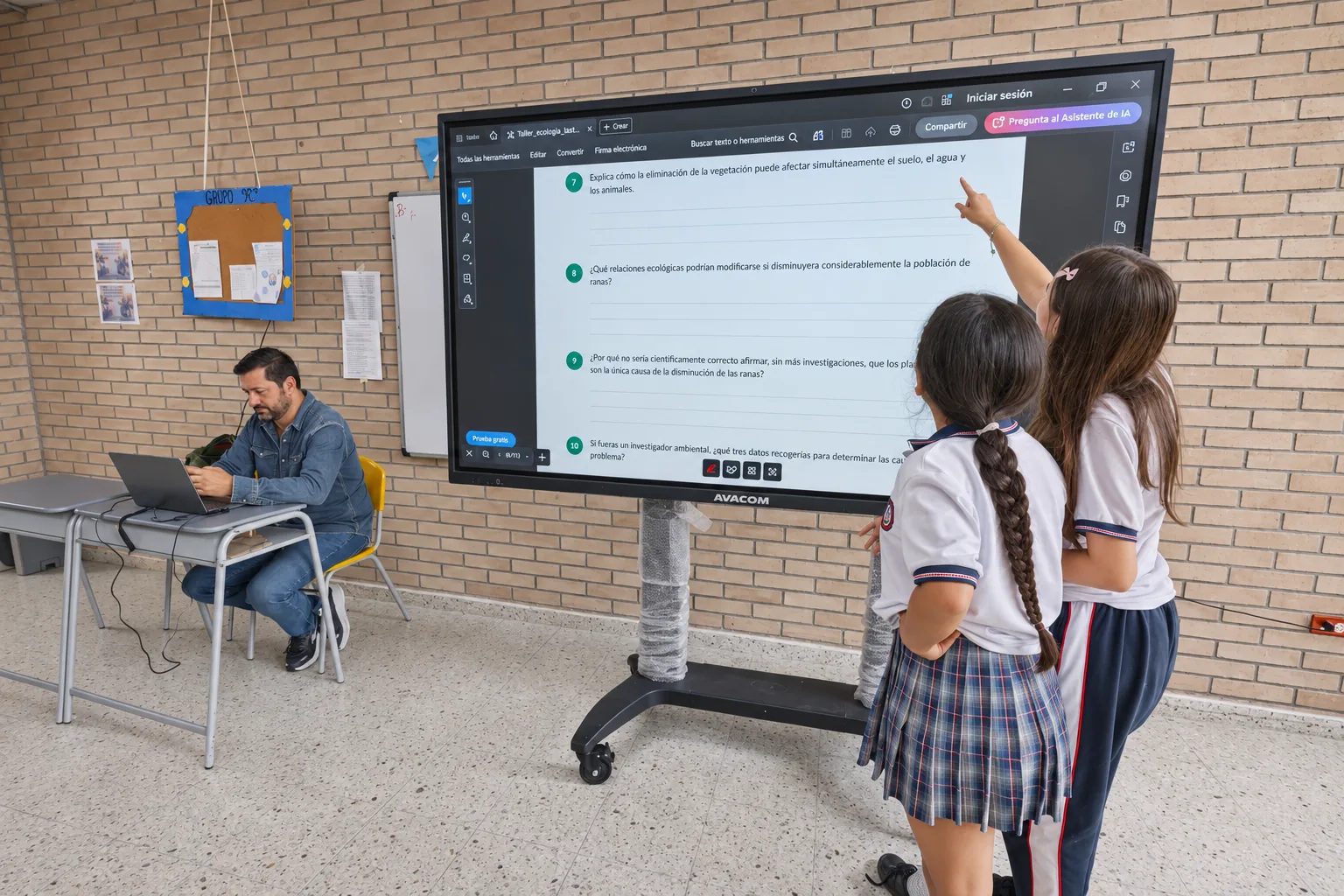
The flipped classroom moves the first encounter with content to before class, and practice into the classroom.
Class time is freed up for clearing up questions and working in teams.
It works when the content is available to everyone, with or without internet.
The teacher closely supports each student during practice.
In a traditional lesson, the teacher explains a new topic during class time and students practice at home, alone, right when questions come up and there is no one to answer them. The flipped classroom turns that sequence around with a simple, powerful idea: the first encounter with the content happens before class, and valuable classroom time is devoted to what truly needs the teacher's presence.
What a flipped classroom is
The idea, also known as the inverted classroom or flipped learning, reorganizes two moments of learning. Before the session, each student approaches the topic at their own pace, through a short video, a reading or an interactive activity. During class, that time is spent practicing, discussing, applying and creating, with the teacher moving among the students. The classroom becomes a workshop, and the teacher steps in right when the difficulty arises.
Why it changes class time
The difference is felt right away. When the initial explanation happens beforehand, class time stops being a monologue and fills up with questions, exercises and conversation. The teacher sees in real time who is moving ahead and who is stuck, and adjusts on the fly. Students who need to review go back to the video as many times as they need, and those who have already mastered the topic move on to a bigger challenge. Everyone uses the classroom for what serves them best.
The equity challenge, solved with offline
The flipped classroom has one sensitive point: if the pre-class content lives online, students without a connection at home are left at a disadvantage. That is where offline-first technology changes the story. When the content is downloaded onto the school's devices or travels with the student without depending on the network, the model works for everyone, in the city and in rural areas. Flipping the lesson becomes possible in any community.
How to get started
It is best to start with a single topic and a short piece of material, five to ten minutes long, that students can watch calmly. The key is to plan the next session around a question or problem that requires having seen that material. Over time, the teacher builds a small library of pre-class content and wins back class hours for what no video can replace: supporting, challenging and talking with students.
Flipping the lesson gives the classroom back its best use: the moment when teacher and student think together.
AVACOM's eClass Digital platform and its curriculum-aligned content work with an offline-first approach, so every student can access pre-class material with or without internet and class time is devoted to learning by doing.
よくある質問
What is a flipped classroom?
The flipped classroom is a model in which students have their first contact with the content before class and spend classroom time practicing, clearing up questions and working in teams.
What do you need to run a flipped classroom?
Short content available to every student, with or without internet, and a lesson planned around practice. An LMS platform with an offline-first approach makes both easier.
Does a flipped classroom work without internet at home?
Yes. With offline-first technology, the pre-class content travels on the school's or the student's devices, so the model reaches any community, urban or rural.